 Search










Description
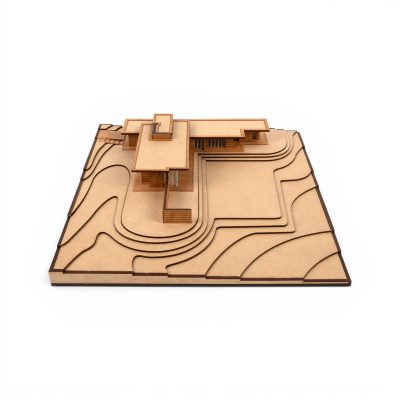
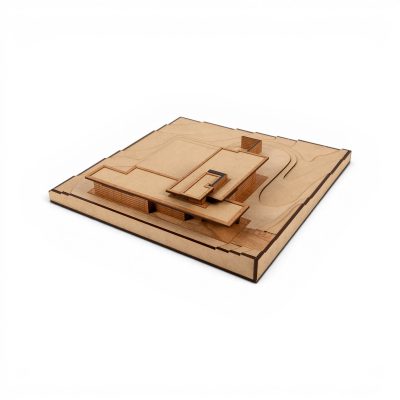
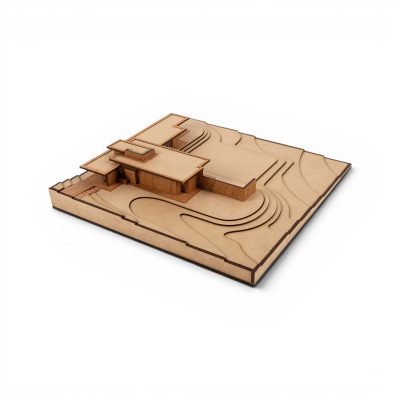
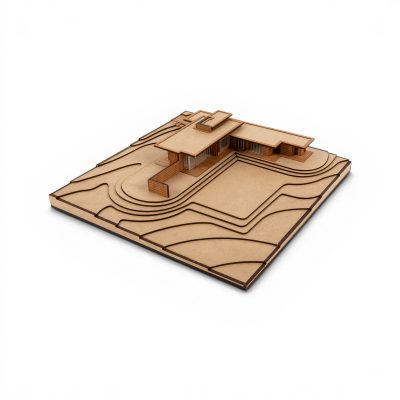
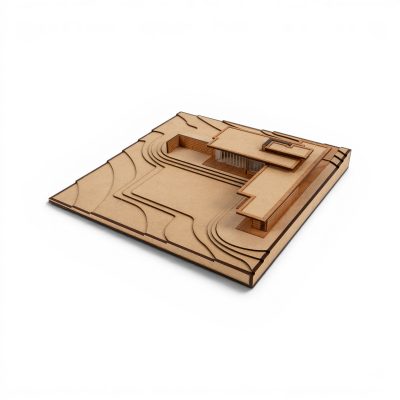
A ready-to-assemble architectural model kit of Frank Lloyd Wright’s Herbert and Katherine Jacobs House in Madison, Wisconsin, one of the most important domestic designs in modern American architecture.
Also known as Jacobs I, the house was designed for Herbert and Katherine Jacobs as a modest, carefully considered family home. Rather than creating a grand residence for wealthy clients, Wright used the project to refine his vision for a more affordable, distinctly American way of living. The result is widely considered his first Usonian house: a compact, single-story design shaped by efficiency, natural materials, open planning, and a close relationship to the land.
From an architectural standpoint, the Jacobs House is significant because it helped redefine the modern home. Its simple L-shaped plan, low horizontal profile, integrated living spaces, and clear structural logic moved away from traditional domestic layouts. The house brought together ideas that would become central to Wright’s later Usonian work, including human-scaled proportions, warm material expression, and a fluid connection between interior and exterior space. Its open arrangement of living, dining, and kitchen areas also anticipated ideas that would influence postwar American residential design.
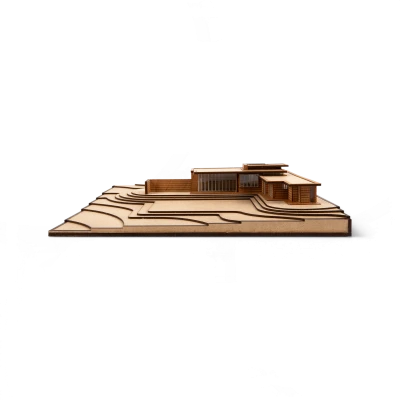
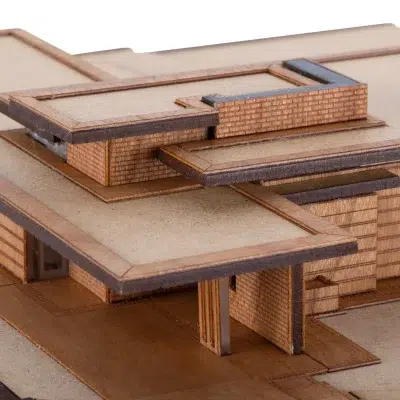
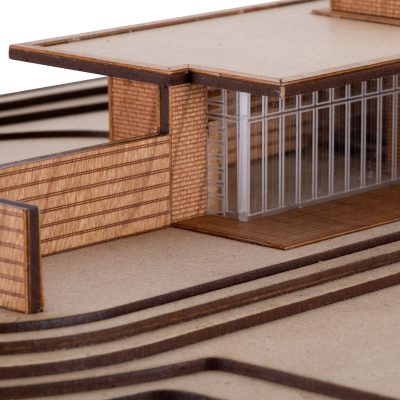
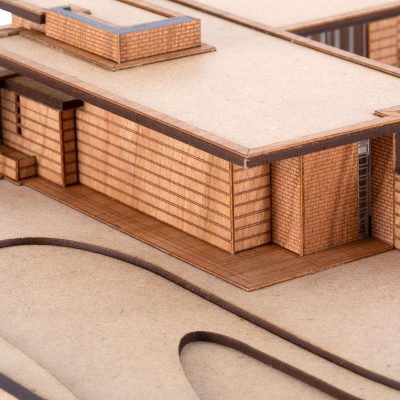
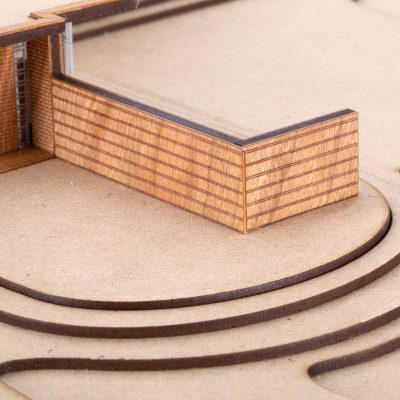
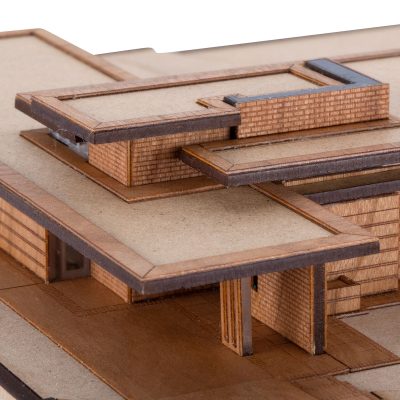
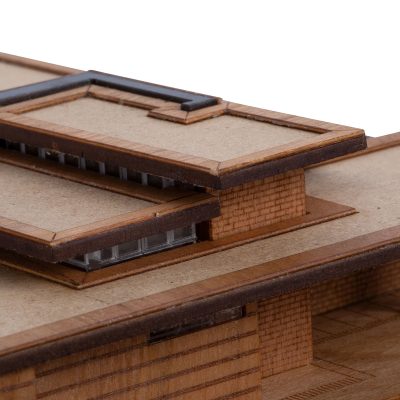
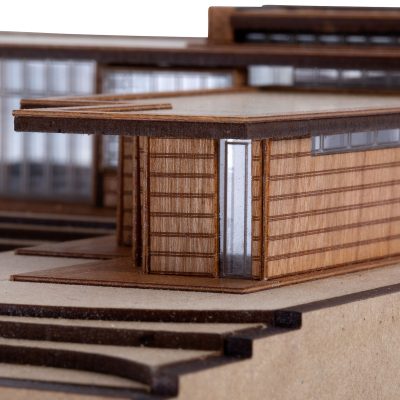
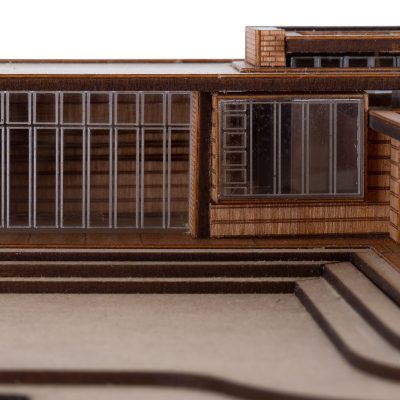
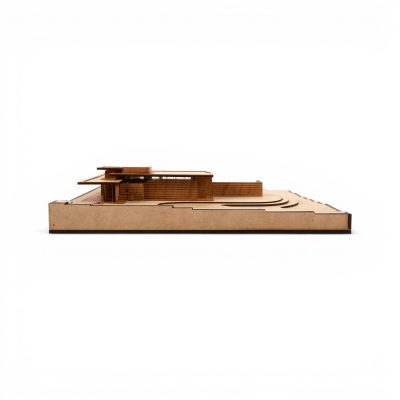
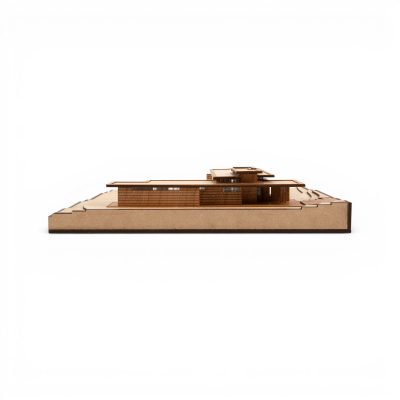
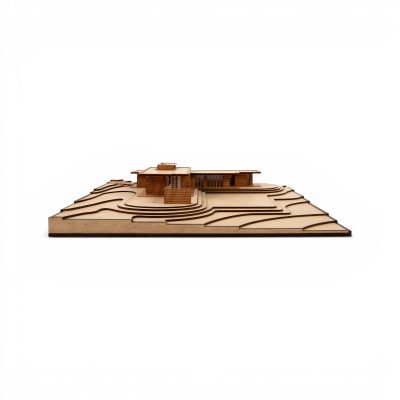
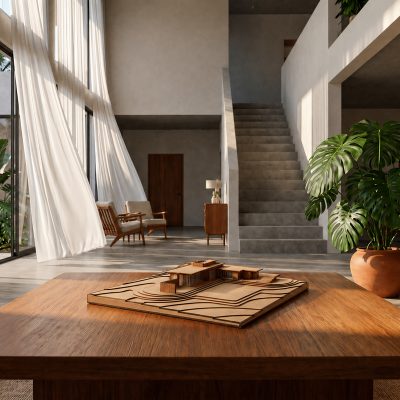
Made by Little Building Co., this 1:100 scale wooden architectural model kit captures the home’s disciplined geometry, distinctive L-shaped plan, raised platform, horizontal wall panels, and brickwork details. The model also reflects Wright’s organic approach through cherry timber cladding and a landscape base that emphasizes the house’s relationship to its site.
This kit marks Little Building Co.’s first model of a Frank Lloyd Wright domestic work, making it especially suited to collectors, architecture enthusiasts, and anyone interested in Wright’s residential legacy.
The kit includes clear, stage-by-stage assembly diagrams. Glue is required and not supplied; Little Building Co. recommends a good-quality PVA wood glue, which dries clear and allows time to carefully reposition parts during assembly.










Reviews