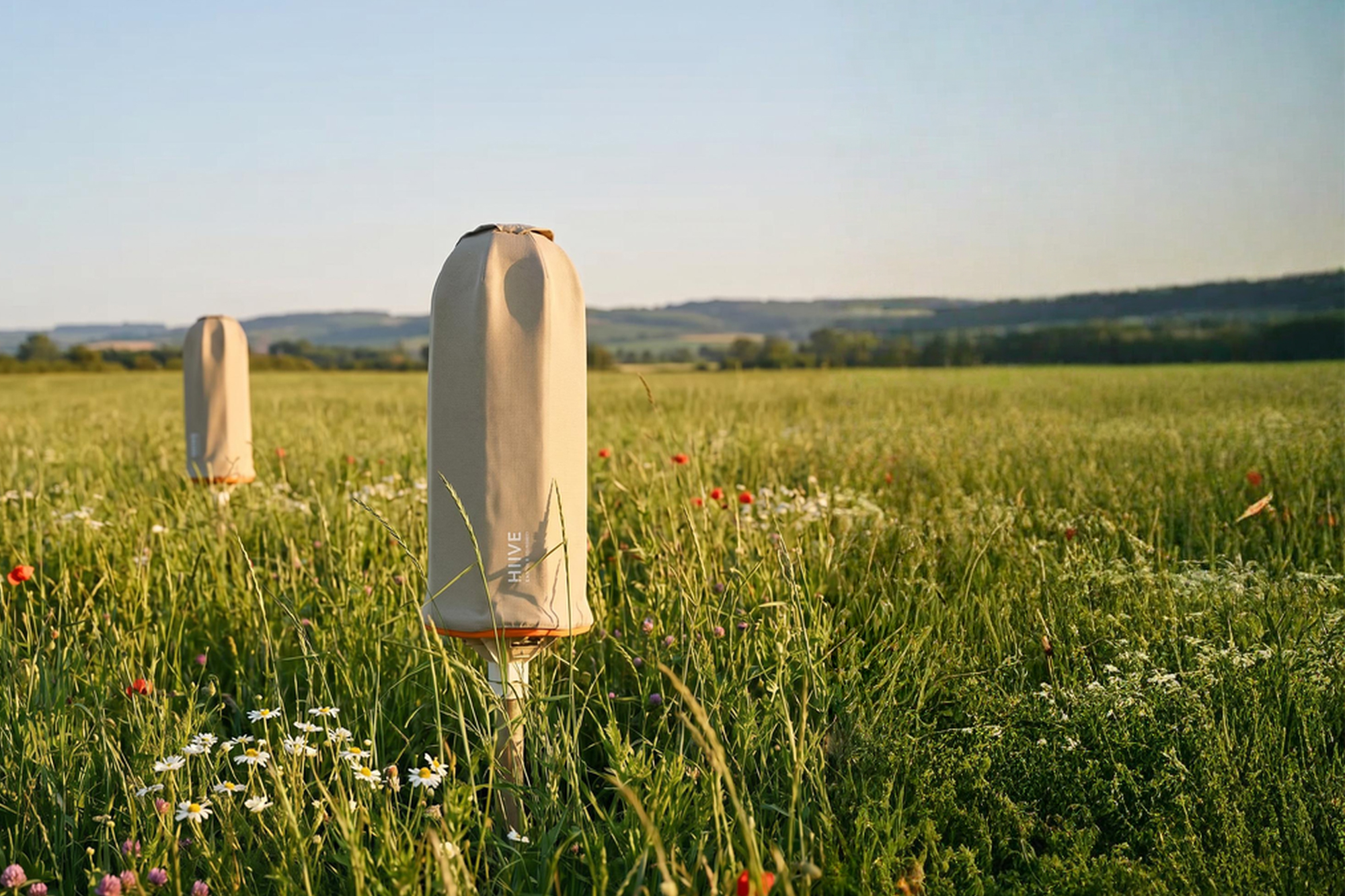
Honey per harvest
Storm stability
Tree-cavity model
Patented Design
HIIVE is made with durable, lower-impact materials chosen for
long-term outdoor performance and a lighter environmental footprint.

Constructed with recycled industrial plastics and hemp fibers, HIIVE gives waste materials a durable second life.

Rain, heat, frost, and seasonal shifts are part of the job. HIIVE is designed for long-term outdoor exposure without compromising structural stability.
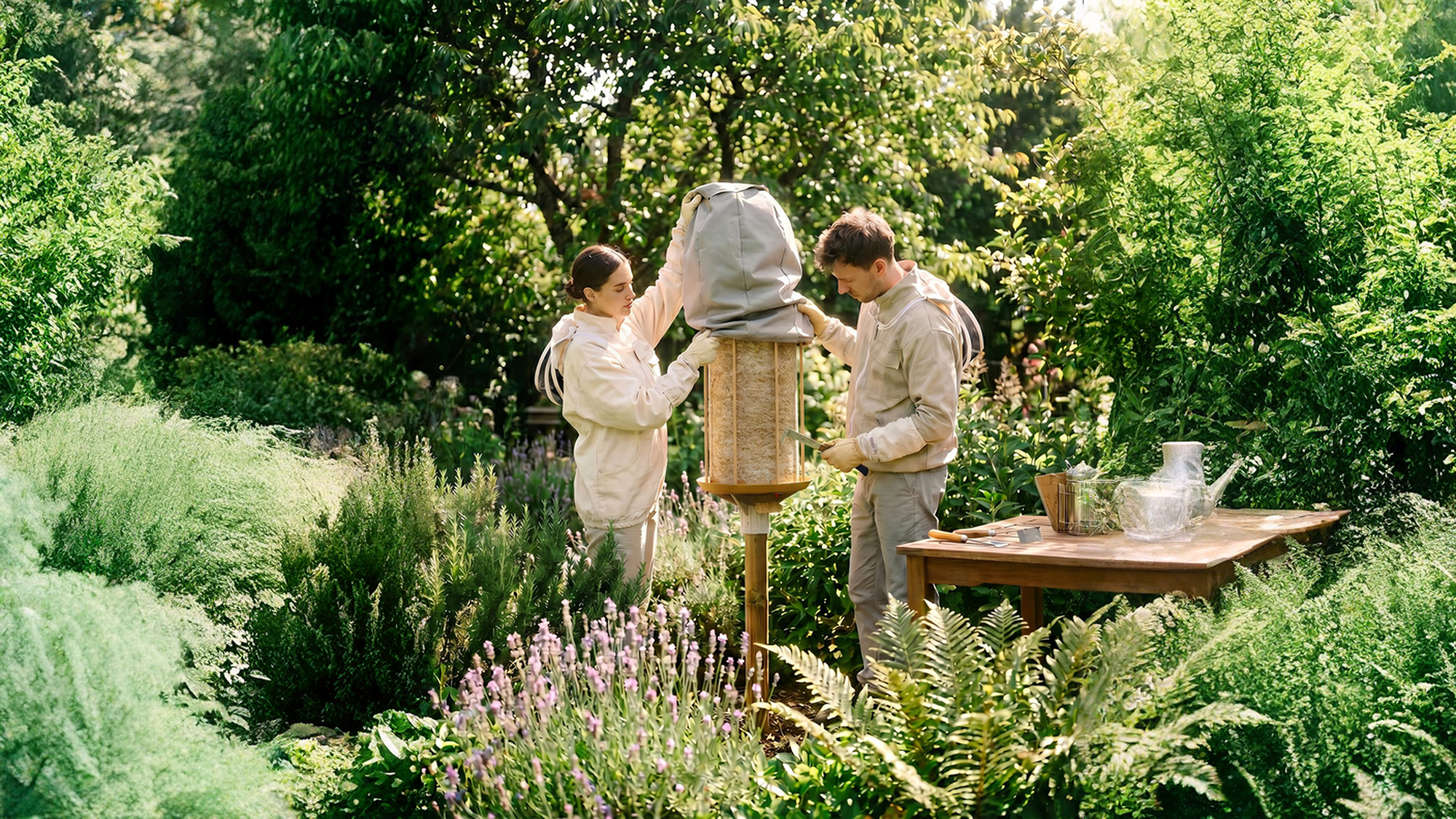
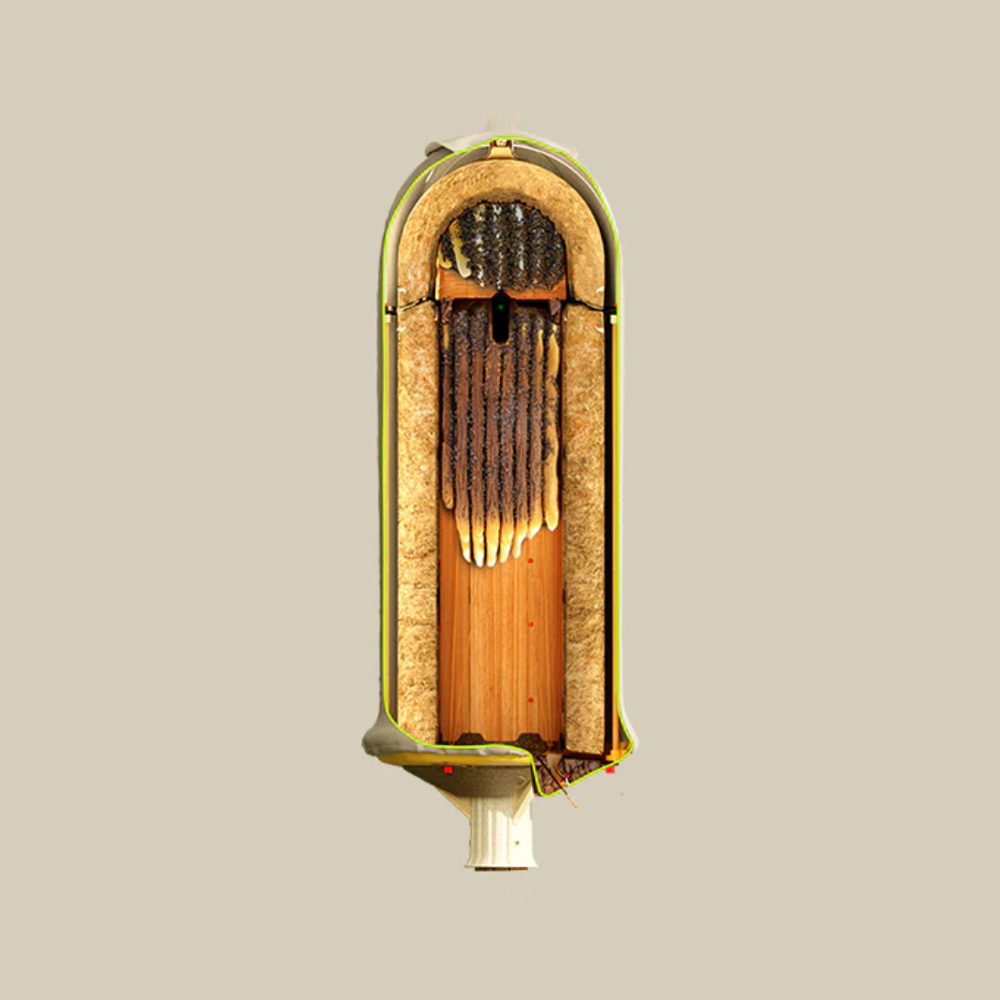
HIIVE rethinks the hive around the form bees evolved with: the tree cavity. Its cylindrical brood space encourages natural comb building and a more species-appropriate internal volume, giving the whole system a clearer biological logic from the start.
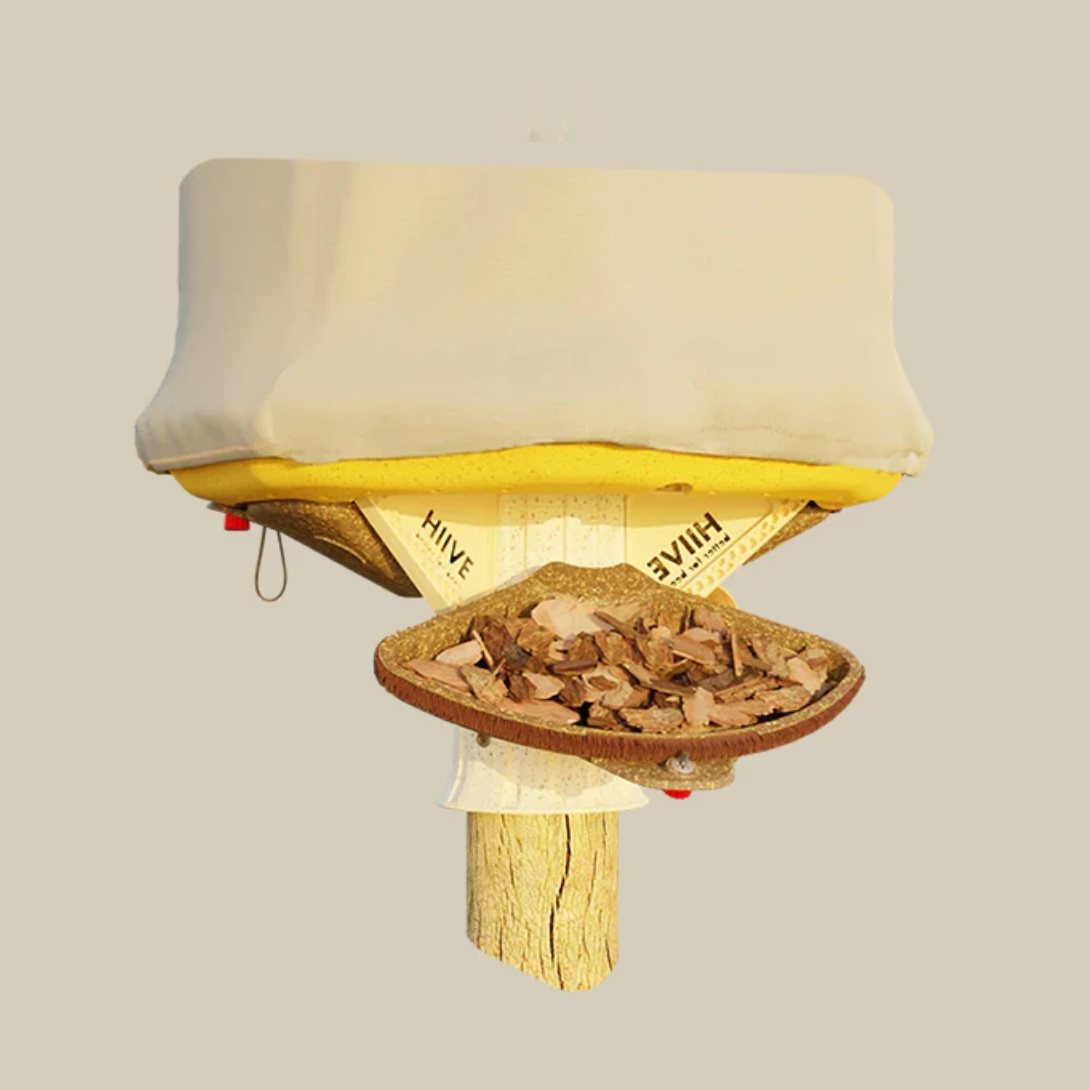
HIIVE is designed to support observation and responsible care, not just passive use. The system allows targeted sampling and practical oversight, making it relevant for researchers, educators, apiary managers, and thoughtful backyard beekeepers alike.

HIIVE includes a dedicated honey room designed for a smaller, more deliberate harvest. The goal is not maximum extraction, but a cleaner way to collect surplus honey while leaving more of the colony’s reserves in place.
Support healthier bee populations while experiencing beekeeping in a more natural way.
Observe the colony, learn from it, and harvest honey with greater care and balance.

It can be, but only with thoughtful placement and responsible beekeeping. HIIVE’s own guide notes that bees can sting humans, pets, and other animals, and it stresses taking precautions, following local rules, and being mindful of neighbors. A good setup keeps bee flight paths away from doors, walkways, playgrounds, and other high-traffic areas. University extension guidance says hives should be placed so flight paths do not cross sidewalks, playgrounds, or places where bees could disturb people, livestock, or pets.
It can be, but it should never be treated like a decorative garden object. HIIVE explicitly says bees can sting humans, pets, and other animals, and that the beekeeper is responsible for nearby people and animals. In practice, that means keeping the hive out of play areas, managing the flight path carefully, and making sure children and pets do not treat the hive like something to climb on or investigate up close.
Yes, there is setup and assembly, but HIIVE is designed to be simpler than a more cumbersome fixed installation. The product page says it includes a pole and ground sleeve and can be set up quickly, even on uneven or overgrown terrain, without building a separate base. At the same time, the official user guide includes dedicated setup and building steps for the pole, insulation parts, brood chamber, honey room, base, flight deck, and final setup, so this is not a zero-assembly product straight out of the box.
HIIVE still requires real beekeeping. The user guide includes inspection, queen checks, Varroa checks, Varroa treatment, feeding, and food-stock checks. In other words, this is not a “set it and forget it” hive. You should expect regular observation of bee activity and hive condition, periodic checks for pests and queen status, and seasonal feeding or food-reserve checks when needed.
After installation, the first job is not harvesting — it is establishing and monitoring the colony. HIIVE’s guide presents two main ways to get bees into the hive: self-settlement, which it describes as more natural and beginner-friendly but also slow and weather-dependent, and “hiving the bees,” which it describes as quick and safe but requiring more experience. That means colonization time depends heavily on how you start: if you install bees directly, occupancy is immediate; if you wait for natural settlement, it can take a long time and success is not guaranteed. Once bees are in, HIIVE expects regular inspections, queen checks, Varroa monitoring, and food-stock checks.
Not necessarily. HIIVE’s guide supports self-settlement and swarm-in approaches, which do not require buying a separate queen. If you start with purchased bees instead, package bees typically include a newly mated queen, and nucleus colonies typically include a laying queen. So in many cases, the queen comes with the bees you acquire rather than being bought separately.
Yes, but with a reality check. HIIVE describes self-settlement as beginner-friendly, but its own guide also says beekeeping requires special expertise, involves risks, and calls for continuous learning, local guidance, and compliance with regulations. This is beginner-accessible, not beginner-effortless.
Yes. HIIVE’s user guide emphasizes observation at the flight hole and visual assessment inside the tree-hollow-like brood space. It points to things like flight activity, pollen entry, behavior, mortality, odor, pests, moisture, and comb condition as key signs of colony health.
Yes. HIIVE’s guide includes a specific Varroa-treatment section and gives example instructions for FormicPro strips and a Liebig vaporizer with formic acid, while also telling users to follow manufacturer instructions and local laws.
HIIVE’s guide says the brood chamber can be weighed to assess reserves. It states that an empty brood chamber weighs 1,140 g and says a total brood-chamber weight above 10 kg should be targeted to help the colony overwinter safely.
HIIVE says it can be set up in natural settings, even on uneven ground, and recommends placing it as high as possible to support smoother takeoffs and landings and reduce moisture problems. The user guide snippet also says the entrance is best oriented south for maximum sunlight and that bees need a clear runway for landing and takeoff.
It can be especially interesting in those settings because it combines a species-appropriate design concept with practical monitoring, queen checks, Varroa checks, treatment access, and food-stock tracking. That makes it relevant not only for individual keepers but also for university apiaries, teaching environments, and observation-based programs. This is an inference from HIIVE’s product page and user guide structure.
 Search


